Why data centre cooling is not comfort cooling
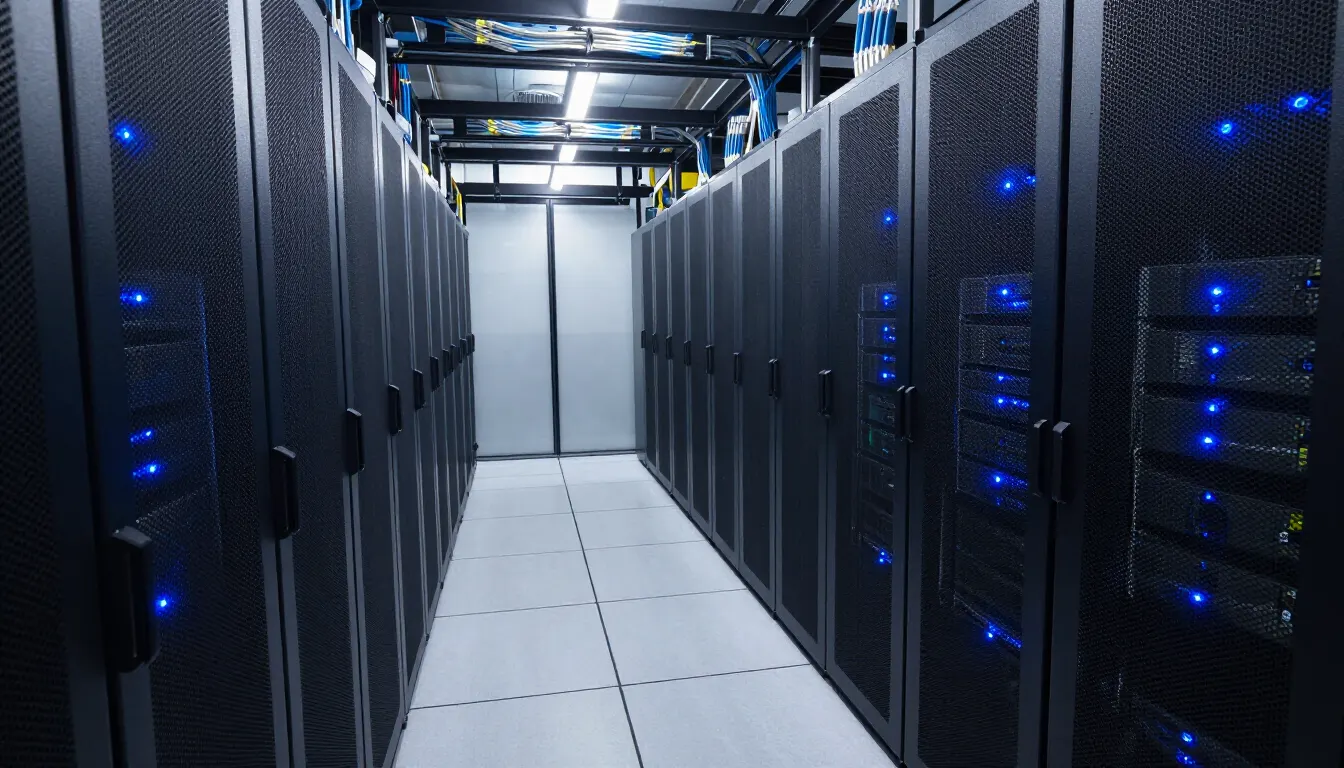
An office air conditioner handles people and a few computers. A data centre handles racks that dump heat continuously, 24/7/365, with no diurnal drop at night. The cooling load is dense, constant and unforgiving — a 2°C rise at the rack intake can push server fans to maximum and trigger thermal throttling.
Precision cooling (CRAC/CRAH) units are built for this: tight temperature and humidity control, high sensible heat ratio, and controls designed for continuous duty.
Containment: the cheapest PUE win
Mixing hot exhaust air with cold supply air is the single biggest efficiency sin in a data hall. Cold-aisle or hot-aisle containment separates the two streams, raises the return temperature to the cooling units, and lets you raise the supply temperature safely — which directly lowers fan and chiller energy.
Containment retrofits typically pay back in months, not years, and they are usually the first thing we recommend on an existing hall.
Redundancy and uptime
Cooling redundancy is matched to your uptime tier. N+1 covers a single unit failure; 2N covers a whole system failure. The right architecture depends on your SLA, your IT load growth plan, and how much downtime cost you can absorb.
We design redundancy into the cooling from day one — including leak detection, BMS alarms and failover logic — so a single failure never becomes a thermal event.
Want this for your site?
Talk to a Head On Solutions engineer about your HVAC project — fixed pricing, ISHRAE-member crews, written warranty.